


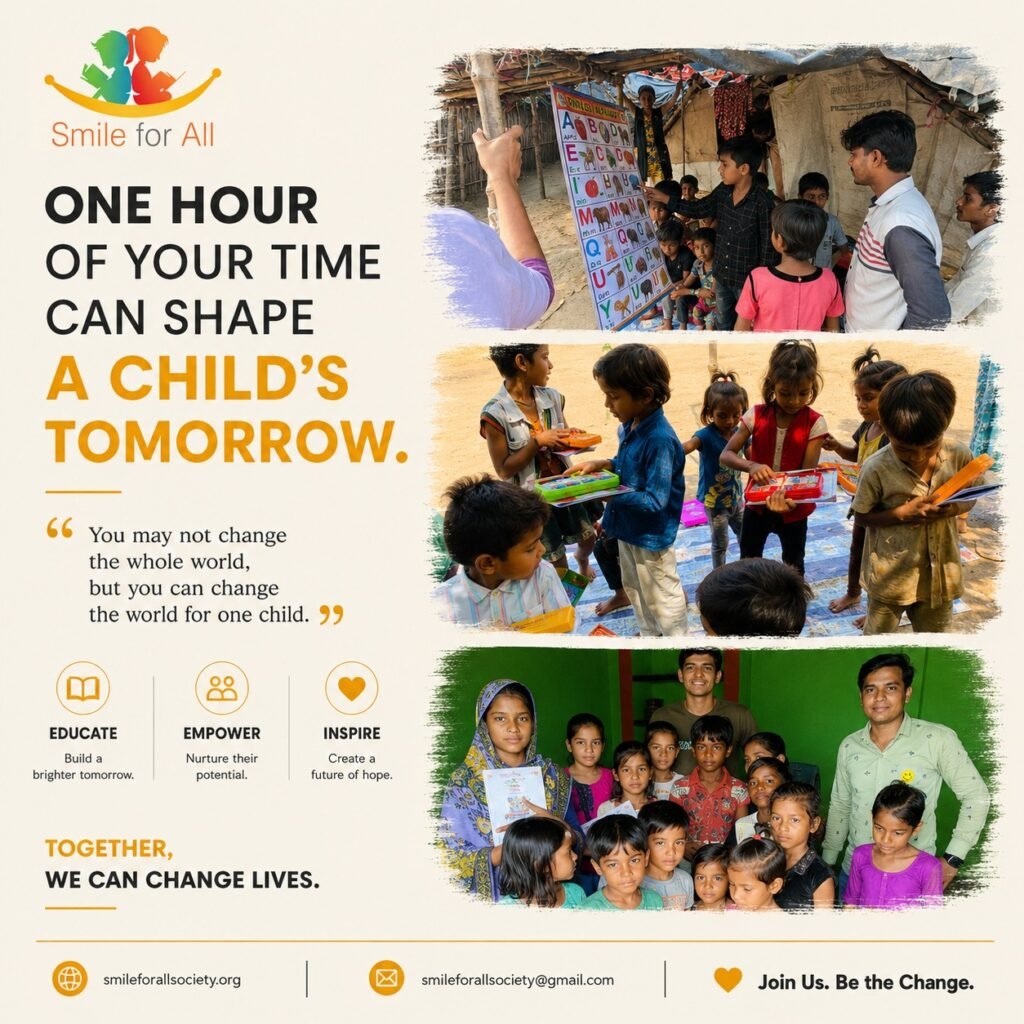
In India, education is free and a right for every child. On paper, everything is provided – admission, books, uniforms, and mid-day meals. So, why do children still drop out? Why does learning still remain a challenge?
Because free education has a hidden cost that never appears on any receipt.
The Cost That Isn’t About Money
For a family that earns daily wages, free education is not truly free. The real cost is a new notebook, a school bag, a pair of slippers, or the bus fare to reach a school 3 kilometers away. Many times, it is the cost of losing a helping hand at home or in the fields. When survival is a daily struggle, even a small expense of Rs. 50 becomes a reason to keep a child at home. This is the biggest reason why many students disappear after Class 8.
The Gap Between Enrollment and Learning
Getting a child enrolled is just the first step. Making sure that child actually learns is the real challenge. In many government schools, one teacher is handling 60 to 80 students from different classes at once. The dedication of teachers is unmatched, but they are overworked and need support.
There is a huge difference between sitting in a classroom and understanding what is taught. Who will give extra time to a child who cannot read fluently in Class 5? Who will teach basic computer skills, career guidance, hygiene, and life skills? The government system provides access, but quality needs more hands and more hearts.
Why NGOs Are Important for Education
This is where NGOs play a crucial role. We don’t replace the system; we strengthen it.
1. We Fill the Invisible Gaps: NGOs provide the small but critical things that keep a child in school – from stationery and learning materials to counselling and remedial classes.
2. We Ensure Regular Learning: Through regular field visits, conversations with parents, and tracking each child’s attendance and progress, NGOs make sure that enrollment turns into regular learning.
3. We Bring Emotional Support: Many children are first-generation learners. They need someone to ask them about their dreams, to tell them that their education matters, and to remind them why they should not give up.
4. We Become a Bridge of Trust: An NGO connects two worlds – a child who needs support to continue education, and a sponsor or supporter who wants to bring real change. Through transparent reporting and regular updates, we build trust that every contribution is creating an impact.
Free education can bring a child to the school gate. But it takes a community of teachers, parents, and NGOs to make sure that child walks through that gate every single day, learns with joy, and grows up with hope.
Leave a Reply